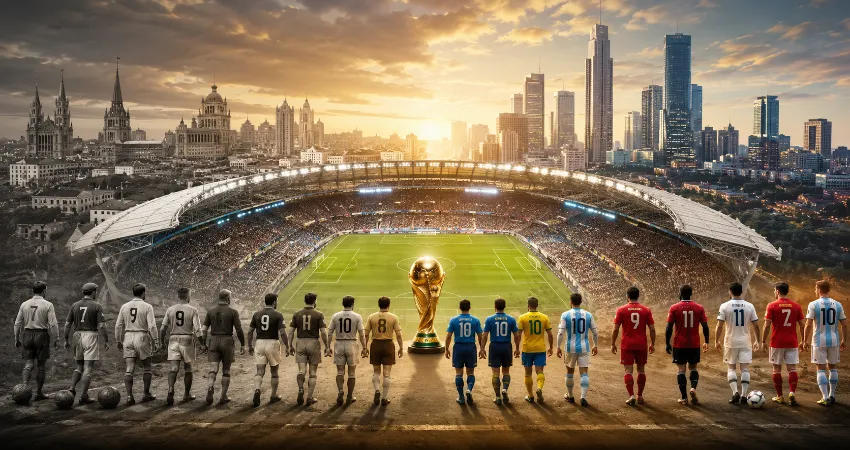
Every World Cup Format Explained: From 13 Teams in 1930 to the 48-Team Expansion

The FIFA World Cup is the most prestigious tournament in international football, bringing together the best national teams from around the globe. Since its inaugural edition in 1930, the competition has undergone several format changes to accommodate the growing popularity of football and the increasing number of participating nations. Each expansion has reflected the sport’s global development and FIFA’s efforts to make the tournament more inclusive.
Over the decades, the World Cup has evolved from a small competition featuring just 13 teams to a massive global event that will welcome 48 nations in 2026. These changes have influenced qualification systems, tournament structures, and the overall experience for players and fans alike.
This article explains every major FIFA World Cup format used throughout history, highlighting how the tournament transformed from its modest beginnings to the largest World Cup ever planned.
The 1930 FIFA World Cup: The Beginning with 13 Teams
The first FIFA World Cup took place in Uruguay in 1930. Only 13 teams participated because international travel was difficult and expensive at the time. Seven teams came from South America, four from Europe, and two from North America.
The tournament was divided into four groups. The winners of each group advanced directly to the semifinals, followed by the final. There was no knockout round before the semifinals. Uruguay eventually defeated Argentina to become the first World Cup champion.
The 1934 and 1938 World Cups: Straight Knockout Format
For the 1934 World Cup in Italy, FIFA adopted a 16-team straight knockout format. Every match was part of the elimination stage, meaning teams were eliminated after a single loss.
The same structure was used again in 1938 in France. While the format created high-stakes matches from the beginning, it also meant some teams traveled long distances only to play one game before being eliminated.
The 1950 World Cup: A Unique Final Group Stage
After World War II, the World Cup returned in 1950 in Brazil. This tournament featured a unique structure unlike any other edition.
The competition started with group stages, but instead of a traditional final, the winners of the first-round groups advanced to a final round-robin group. The team with the most points in this final group became the champion. Brazil and Uruguay effectively played a title-deciding match, which Uruguay famously won.
The 1954 to 1970 Format: 16 Teams with Group and Knockout Stages
From 1954 through 1970, the World Cup settled into a more familiar structure. Sixteen teams were divided into four groups of four teams each.
The top two teams from each group advanced to the quarterfinals. From there, the tournament followed a traditional knockout format consisting of quarterfinals, semifinals, and the final. This structure balanced group-stage competition with exciting elimination matches.
The 1974 and 1978 Format: Two Group Stages
FIFA introduced another major change in 1974. After the initial group stage, the qualified teams entered a second group stage instead of immediate knockout rounds.
The winners of the second-round groups advanced directly to the final, while the runners-up played for third place. This format was intended to guarantee more matches between strong teams, but it reduced the drama associated with knockout football.
The 1982 World Cup Expansion: 24 Teams
The 1982 World Cup in Spain marked the first major expansion of the tournament. The number of participants increased from 16 to 24 teams.
The teams were divided into six groups of four. The top two teams from each group advanced to a second group stage consisting of four groups of three teams. The winners of these groups moved on to the semifinals.
This expansion allowed more countries from Africa, Asia, and North America to participate, reflecting football’s growing global reach.
The 1986 to 1994 Format: 24 Teams with Round of 16
FIFA revised the structure again in 1986. The tournament still featured 24 teams, but the second group stage was removed.
Instead, the top two teams from each group, along with the four best third-placed teams, advanced to a newly created Round of 16. This format proved popular because it combined a larger field with the excitement of knockout football.
The same structure remained in place for the 1990 and 1994 tournaments.
The 1998 Expansion: 32 Teams
The 1998 FIFA World Cup in France introduced another significant expansion, increasing the field to 32 teams.
The tournament featured eight groups of four teams. The top two teams from each group advanced to the Round of 16, followed by quarterfinals, semifinals, and the final.
This format quickly became one of the most successful in World Cup history. It provided a clear structure, fair qualification opportunities, and a balanced number of matches.
The 2002 to 2022 Era: The Classic 32-Team World Cup
From 2002 through 2022, FIFA retained the 32-team format. The tournament became a truly global event, featuring representatives from every continent.
The group stage remained straightforward, with eight groups of four teams. The top two teams from each group advanced to the knockout rounds.
Many memorable moments occurred during this period, including surprise underdog performances, dramatic penalty shootouts, and the emergence of new football powers. The format was widely praised for balancing competitiveness and excitement.
The 2026 World Cup: The New 48-Team Expansion
The FIFA World Cup 2026, hosted by the United States, Canada, and Mexico, will introduce the largest expansion in tournament history.
The competition will feature 48 teams instead of 32. FIFA approved the expansion to provide more nations with the opportunity to participate on football’s biggest stage.
The new format will consist of 12 groups of four teams each. The top two teams from every group, along with the eight best third-placed teams, will advance to a new Round of 32. From there, the tournament will follow a knockout structure leading to the final.
This format increases the total number of matches while ensuring every participating nation receives at least three group-stage games.
Why FIFA Continues to Expand the World Cup
Several factors have contributed to the tournament’s growth. Football has expanded dramatically across Africa, Asia, North America, and Oceania. More nations now have competitive teams capable of performing at the highest level.
Expansion also promotes football development worldwide. Participating in a World Cup can boost investment in infrastructure, youth programs, and domestic leagues. For many countries, qualification represents a major achievement that inspires future generations.
Benefits and Challenges of the 48-Team Format
The expanded tournament offers several advantages. More countries will experience the World Cup, fans will enjoy additional matches, and smaller football nations will have greater opportunities to compete against elite teams.
However, some critics argue that expansion could create mismatches between stronger and weaker teams. Others believe the longer tournament schedule may place additional physical demands on players.
FIFA believes the benefits outweigh the challenges and expects the 2026 edition to further increase the global appeal of the competition.
FAQs About Every World Cup Format Explained
1. How many teams played in the first FIFA World Cup?
The first FIFA World Cup in 1930 featured 13 teams. Participation was limited due to travel difficulties and the relatively early stage of international football development.
2. Why did the World Cup expand over time?
The tournament expanded because football became more popular worldwide. More nations developed competitive national teams, creating demand for additional qualification spots.
3. When did the World Cup first expand to 24 teams?
The first 24-team World Cup was held in Spain in 1982. This expansion allowed more countries from different continents to participate in the tournament.
4. When did the World Cup move to 32 teams?
The expansion to 32 teams occurred in 1998. France hosted the tournament, which introduced the format that remained in place through the 2022 World Cup.
5. How many teams will participate in the 2026 FIFA World Cup?
The 2026 FIFA World Cup will include 48 teams, making it the largest tournament in the competition’s history.
6. What is the format of the 2026 World Cup?
The tournament will feature 12 groups of four teams. The top two teams from each group and the eight best third-placed teams will advance to the Round of 32.
7. Which World Cup used a final group stage instead of a final match?
The 1950 FIFA World Cup used a final round-robin group stage. The champion was determined by points rather than a traditional final match.
8. What was unique about the 1974 and 1978 formats?
Those tournaments featured two group stages. Teams advanced from the first group stage into a second round of groups before reaching the final.
9. Will the 48-team format increase the number of matches?
Yes. The expanded structure significantly increases the total number of matches, providing more opportunities for teams and additional entertainment for fans worldwide.
10. Which World Cup format is considered the most successful?
Many football analysts and fans consider the 32-team format used between 1998 and 2022 to be highly successful because it balanced competitiveness, fairness, and excitement.
Conclusion
The FIFA World Cup has evolved dramatically since its debut in 1930. From a modest 13-team competition in Uruguay to the groundbreaking 48-team tournament planned for 2026, each format change has reflected football’s growing global influence.
While structures have varied over the decades, the tournament’s mission remains unchanged: bringing together the world’s best national teams to compete for football’s greatest prize. The 2026 expansion marks the next chapter in this remarkable journey and promises to make the World Cup more inclusive than ever before.