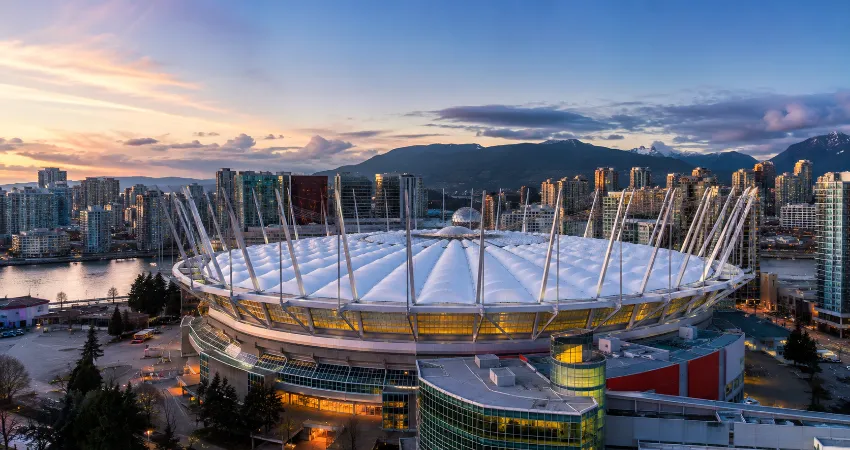
The Complete History of BC Place Vancouver: From Construction to Major Enhancements

BC Place is one of Canada’s most recognizable sports and entertainment venues. Located in the heart of Vancouver, British Columbia, the stadium has played a significant role in the city’s cultural, sporting, and economic development for more than four decades. From hosting major sporting events to international concerts and community celebrations, BC Place has become a landmark that reflects Vancouver’s growth and global reputation.
Since opening in the early 1980s, the stadium has undergone several transformations to meet modern standards and changing audience expectations. Its innovative design, large seating capacity, and state-of-the-art upgrades have allowed it to remain one of North America’s premier multi-purpose venues.
This article explores the complete history of BC Place Vancouver, covering its construction, architectural innovations, major renovations, notable events, and the enhancements that have shaped the stadium into the iconic venue it is today.
The Vision Behind BC Place
During the 1970s, Vancouver experienced rapid growth and increasing interest in professional sports and large-scale entertainment events. City planners and provincial leaders recognized the need for a world-class stadium capable of hosting major gatherings throughout the year.
The concept of BC Place was developed to provide British Columbia with a modern indoor venue that could support sports competitions, trade shows, exhibitions, and cultural events. The project was also intended to stimulate economic activity and strengthen Vancouver’s reputation as an international destination.
Construction of BC Place
Construction of BC Place began in 1980 under the supervision of the provincial government. The stadium was strategically located near downtown Vancouver, making it easily accessible for residents and visitors alike.
The project represented a significant engineering achievement for its time. Architects and engineers designed a stadium capable of accommodating tens of thousands of spectators while incorporating innovative structural elements. The facility was built with versatility in mind, allowing it to host a wide variety of events throughout the year.
After several years of planning and construction, BC Place officially opened on June 19, 1983.
The Original Air-Supported Roof
One of the most distinctive features of the original BC Place was its air-supported roof. At the time of its completion, the roof was among the largest of its kind in the world.
The roof remained inflated through a carefully controlled air pressure system. This engineering solution provided a spacious interior without the need for numerous support columns, ensuring clear sightlines for spectators.
The innovative design attracted international attention and established BC Place as a technological landmark in stadium architecture.
Opening Years and Early Success
Following its grand opening, BC Place quickly became a focal point for sports and entertainment in British Columbia. The stadium served as the home venue for professional football and soccer teams while also hosting concerts, conventions, and community events.
Its large capacity and flexible layout made it suitable for a diverse range of activities. Throughout the 1980s and 1990s, millions of visitors attended events at BC Place, helping solidify its status as a key destination within Vancouver.
Expo 86 and International Recognition
One of the most important milestones in the stadium’s history came during Expo 86, the World’s Fair hosted in Vancouver. BC Place played a central role in the celebrations and activities associated with the event.
The global exposure generated by Expo 86 helped showcase Vancouver’s infrastructure and modern facilities to an international audience. BC Place became a symbol of the city’s ambition and ability to host large-scale global gatherings.
Home of Professional Sports
Over the years, BC Place has become closely associated with professional sports in Canada. It serves as the home stadium for the Canadian Football League’s BC Lions and Major League Soccer’s Vancouver Whitecaps FC.
The venue has hosted numerous championship matches, playoff games, and special sporting events. Fans from across Canada and beyond have traveled to Vancouver to experience the atmosphere created within the stadium.
The facility’s adaptability has allowed it to support multiple sports while maintaining high standards for both athletes and spectators.
The Need for Modernization
By the early 2000s, the stadium faced increasing competition from newer venues across North America. While BC Place remained a popular destination, many of its original systems and facilities required modernization.
Advancements in stadium technology, fan expectations, and event production standards highlighted the need for significant upgrades. Provincial authorities began exploring options to ensure the stadium remained competitive for future decades.
The Major Renovation Project
A comprehensive renovation project was announced in the late 2000s. The ambitious initiative aimed to transform BC Place into a modern venue capable of meeting international standards.
The renovation involved extensive structural modifications, upgraded seating areas, improved concessions, enhanced accessibility features, and advanced digital technology. The project represented one of the largest stadium redevelopment efforts in Canadian history.
During the renovation period, certain events were relocated temporarily while construction crews carried out the upgrades.
The Retractable Roof Transformation
The most significant enhancement involved replacing the original air-supported roof with a retractable roof system. This transformation fundamentally changed the stadium’s appearance and functionality.
Completed in 2011, the retractable roof allows the venue to operate in both open-air and enclosed configurations. This flexibility improves the experience for spectators and expands the range of events that can be hosted throughout the year.
The new roof system became one of the defining features of the modern BC Place and received widespread recognition for its innovative engineering.
Modern Technology and Fan Experience
Following the renovation, BC Place introduced numerous technological enhancements designed to improve the visitor experience. High-definition video boards, upgraded sound systems, enhanced lighting, and improved connectivity became key components of the stadium environment.
Modern seating arrangements and expanded hospitality areas also contributed to greater comfort for attendees. These improvements helped position BC Place among the leading sports and entertainment venues in North America.
Major Events Hosted at BC Place
Throughout its history, BC Place has welcomed a wide variety of major events. These include international soccer matches, football championships, cultural festivals, concerts, exhibitions, and community celebrations.
The stadium has hosted performances by globally recognized artists and welcomed audiences from around the world. Its ability to accommodate large crowds while maintaining a high-quality experience has contributed significantly to its enduring popularity.
Economic and Cultural Impact on Vancouver
BC Place has generated substantial economic benefits for Vancouver and British Columbia. Major events attract visitors who contribute to local businesses, including hotels, restaurants, transportation providers, and retail establishments.
Beyond economic contributions, the stadium has become an important cultural institution. It serves as a gathering place where residents and visitors come together to celebrate sports, music, and community achievements.
The venue’s presence has helped strengthen Vancouver’s reputation as a vibrant and globally connected city.
The Future of BC Place
As technology and event expectations continue to evolve, BC Place remains committed to innovation. Future improvements may focus on sustainability, digital integration, energy efficiency, and enhanced guest services.
By adapting to changing trends, the stadium is expected to remain a key part of Vancouver’s sports and entertainment landscape for many years to come.
FAQs About The Complete History of BC Place Vancouver
1. When was BC Place officially opened?
BC Place officially opened on June 19, 1983. The stadium was built to provide British Columbia with a world-class venue capable of hosting sports, entertainment, and community events on a large scale.
2. Why was BC Place built?
The stadium was constructed to support major sporting events, exhibitions, concerts, and large public gatherings. It also aimed to enhance Vancouver’s infrastructure and promote economic development within the region.
3. What made the original BC Place roof unique?
The original roof was an air-supported structure that remained inflated through controlled air pressure. At the time, it was considered one of the largest and most innovative roof systems in the world.
4. When was the retractable roof installed?
The retractable roof was completed as part of a major renovation project in 2011. It replaced the original air-supported roof and significantly enhanced the stadium’s flexibility and functionality.
5. Which sports teams play at BC Place?
BC Place serves as the home venue for the BC Lions of the Canadian Football League and Vancouver Whitecaps FC of Major League Soccer. The stadium also hosts various other sporting events throughout the year.
6. What major international event helped increase BC Place’s global visibility?
Expo 86 played a major role in raising the stadium’s international profile. The World’s Fair attracted visitors from around the globe and showcased Vancouver’s modern infrastructure.
7. How did the renovation improve the fan experience?
The renovation introduced upgraded seating, improved accessibility, advanced technology, larger video displays, enhanced sound systems, and modern hospitality facilities that greatly improved visitor comfort.
8. Can BC Place host concerts and entertainment events?
Yes, BC Place is designed as a multi-purpose venue and regularly hosts concerts, cultural festivals, exhibitions, and large-scale entertainment productions alongside sporting events.
9. What economic benefits does BC Place provide?
The stadium attracts tourists and event attendees who spend money on accommodations, dining, transportation, and shopping. This activity supports local businesses and contributes to the regional economy.
10. What is the future outlook for BC Place?
The future of BC Place is expected to focus on continued modernization, sustainability initiatives, technological upgrades, and enhanced visitor experiences to maintain its position as a premier venue.
Conclusion
The history of BC Place Vancouver is a story of innovation, transformation, and community impact. From its groundbreaking construction in the early 1980s to the installation of its iconic retractable roof and modern technological enhancements, the stadium has continually evolved to meet changing needs.
Today, BC Place stands as one of Canada’s most important sports and entertainment venues, serving as both a cultural landmark and a symbol of Vancouver’s growth and global presence.