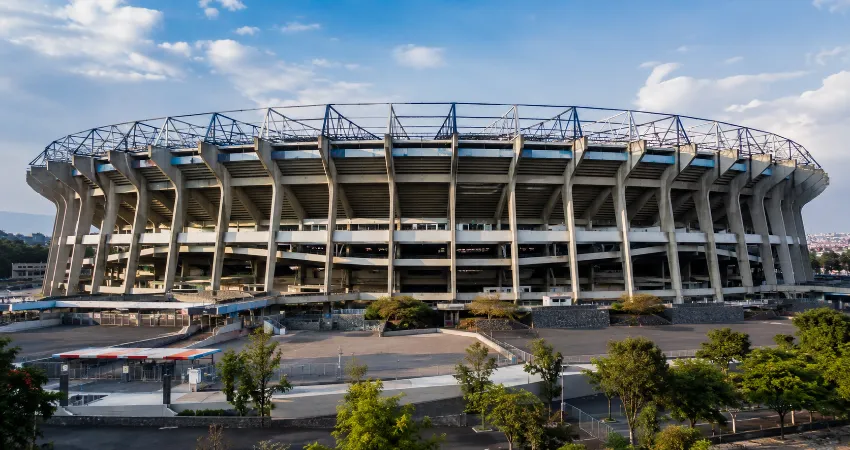
The Architecture of Estadio Azteca: Deep Dive into the Iconic Three-Time World Cup Stadium

Few football stadiums in the world carry the historical significance, architectural brilliance, and cultural importance of Estadio Azteca. Located in Mexico City, this legendary venue has earned a special place in global sports history as the first stadium to host two FIFA World Cup finals and is set to become the first venue to host matches across three different FIFA World Cups. Beyond its sporting legacy, Estadio Azteca stands as a remarkable example of innovative stadium architecture that has influenced venue design for decades.
Since its inauguration in 1966, the stadium has witnessed some of football’s most memorable moments, including legendary performances by world-famous players and historic international tournaments. However, behind these unforgettable events lies an architectural masterpiece carefully designed to accommodate massive crowds while providing excellent visibility and structural stability.
This article explores the architecture of Estadio Azteca in detail, examining its design philosophy, engineering achievements, renovation projects, structural features, and lasting impact on modern stadium development.
The Origins of Estadio Azteca
The vision for Estadio Azteca emerged during a period when Mexico sought to establish itself as a major destination for international sporting events. Construction began in the early 1960s under the leadership of architects Pedro Ramírez Vázquez and Rafael Mijares Alcérreca. Their objective was ambitious: create one of the largest and most advanced football stadiums in the world.
The stadium officially opened on May 29, 1966, and immediately became one of the most impressive sports venues globally. Built to accommodate enormous crowds, it reflected both modern engineering capabilities and Mexico’s growing presence on the international stage.
Architectural Vision and Design Philosophy
The architects approached the project with a focus on functionality, spectator comfort, and long-term durability. Unlike many traditional stadiums of its era, Estadio Azteca was designed to provide unobstructed sightlines from virtually every seating section.
The stadium’s bowl-shaped configuration allows spectators to remain close to the action despite the enormous capacity. This design enhances the viewing experience while maintaining structural efficiency. The architects also incorporated wide circulation pathways and multiple entry points to facilitate crowd movement before and after events.
Another important aspect of the design philosophy was integration with the surrounding urban environment. The stadium was strategically positioned within Mexico City to maximize accessibility while accommodating future infrastructure growth.
Engineering Challenges of Building in Mexico City
One of the most significant challenges faced during construction was Mexico City’s unique geological condition. Much of the city is built on former lakebed terrain characterized by soft and unstable soil. Constructing a massive stadium capable of holding more than 100,000 spectators required innovative engineering solutions.
Engineers utilized extensive foundation systems designed to distribute the structure’s weight evenly across the ground. Special attention was given to settlement control and long-term stability. These measures have allowed the stadium to remain structurally sound for decades despite the challenging environment.
Additionally, the stadium’s location at high altitude presented unique considerations for both construction and athletic performance. The engineering team had to account for local environmental conditions while ensuring the venue met international standards.
The Iconic Bowl Structure
One of Estadio Azteca’s defining architectural features is its massive bowl-shaped design. The seating arrangement is organized in multiple tiers that create a continuous visual connection between spectators and the playing field.
This configuration not only improves sightlines but also contributes to the stadium’s famous atmosphere. The steep seating angles help amplify crowd noise, creating an intense environment during major matches. The design effectively combines capacity, visibility, and acoustics into a cohesive architectural solution.
The bowl structure remains one of the most recognizable elements of the stadium and has influenced numerous large-capacity venues constructed in subsequent decades.
Seating Capacity and Spectator Experience
When originally opened, Estadio Azteca featured a capacity exceeding 100,000 spectators, making it one of the largest football stadiums in the world. Over time, modernization efforts and safety regulations have reduced the capacity while significantly improving spectator comfort.
Modern seating arrangements provide better personal space, improved accessibility, and enhanced amenities. The stadium includes premium hospitality areas, media facilities, and upgraded services designed to meet contemporary expectations.
Despite these changes, the venue has successfully preserved its grand scale and iconic atmosphere, maintaining its reputation as one of football’s most intimidating and exciting environments.
Structural Materials and Construction Techniques
Concrete plays a central role in Estadio Azteca’s structural framework. Reinforced concrete was chosen for its strength, durability, and ability to support large spans and heavy spectator loads. The material also enabled architects to create the stadium’s distinctive geometric forms.
Advanced construction techniques for the era were employed throughout the project. Engineers carefully coordinated structural components to ensure efficient load distribution while maintaining architectural elegance. Many of these methods were considered innovative at the time and contributed to the stadium’s longevity.
The durability of the original construction is evident today, as the venue continues to function effectively after nearly six decades of operation.
Renovations and Modernization Efforts
To remain competitive as a world-class sporting venue, Estadio Azteca has undergone multiple renovation projects. These upgrades have focused on improving infrastructure, safety systems, accessibility, hospitality services, and broadcasting capabilities.
Modern technology has been integrated into the stadium without compromising its historic identity. Enhanced lighting systems, improved digital connectivity, upgraded seating, and modern security measures have all been introduced over the years.
Recent renovation efforts have also been aimed at preparing the stadium for future international competitions, ensuring compliance with evolving global event standards while preserving its architectural heritage.
The Stadium’s Role in World Cup History
Architecturally, few venues can claim a legacy comparable to Estadio Azteca. The stadium hosted matches during the FIFA World Cup tournaments of 1970 and 1986, including both finals. These events elevated the venue’s international reputation and showcased its ability to handle the demands of major global competitions.
The stadium’s design proved exceptionally effective during these tournaments, accommodating large crowds while maintaining operational efficiency. Its successful performance helped establish new benchmarks for future World Cup stadium planning.
As it prepares to participate in another World Cup cycle, Estadio Azteca continues to symbolize football’s enduring connection with architectural excellence.
Architectural Influence on Modern Stadium Design
Estadio Azteca’s influence extends far beyond Mexico. Many contemporary stadium architects have drawn inspiration from its bowl structure, crowd management strategies, and spectator-focused design principles.
The venue demonstrated that large-capacity stadiums could provide excellent viewing experiences while maintaining structural efficiency. Lessons learned from its design have informed projects across multiple continents, contributing to the evolution of modern sports architecture.
Today, many of the concepts pioneered at Estadio Azteca remain relevant in contemporary venue development.
FAQs About The Architecture of Estadio Azteca
1. Why is Estadio Azteca considered architecturally significant?
Estadio Azteca is considered architecturally significant because it successfully combined enormous seating capacity, excellent sightlines, efficient crowd management, and structural durability. Its innovative bowl-shaped design became a model for future stadium projects around the world.
2. Who designed Estadio Azteca?
The stadium was designed by Mexican architects Pedro Ramírez Vázquez and Rafael Mijares Alcérreca. Their collaboration resulted in one of the most recognizable sports venues ever constructed.
3. When was Estadio Azteca opened?
Estadio Azteca officially opened on May 29, 1966. Since then, it has served as a major venue for football, cultural events, and international competitions.
4. What makes the stadium’s bowl design special?
The bowl design allows spectators to enjoy clear views of the field from nearly every seat. It also enhances acoustics, creating the powerful atmosphere for which the stadium is famous.
5. How did engineers address Mexico City’s soil conditions?
Engineers developed specialized foundation systems capable of distributing the stadium’s immense weight across the soft lakebed soil. These solutions helped ensure long-term structural stability.
6. Has Estadio Azteca been renovated?
Yes, the stadium has undergone several renovation projects over the years. These upgrades have improved safety, comfort, accessibility, technology, and broadcasting facilities while preserving its historic character.
7. What materials were primarily used in construction?
Reinforced concrete served as the primary structural material. It provided the necessary strength and durability to support the massive seating structure and large spectator loads.
8. Why is spectator experience important in the stadium’s design?
The architects prioritized visibility, accessibility, and comfort. These considerations helped create an engaging environment where fans could enjoy clear views and efficient movement throughout the venue.
9. How has Estadio Azteca influenced modern stadium architecture?
Many modern stadiums have adopted principles first demonstrated at Estadio Azteca, including bowl-shaped seating arrangements, optimized sightlines, and integrated crowd management systems.
10. What is the future of Estadio Azteca?
The stadium continues to evolve through modernization projects designed to meet international standards. Its ongoing upgrades ensure that it remains a globally recognized sporting venue for future generations.
Conclusion
Estadio Azteca represents far more than a football stadium. It is a landmark achievement in sports architecture, engineering, and urban development. From its innovative bowl structure and advanced foundation systems to its remarkable World Cup legacy, the venue has demonstrated how thoughtful design can create a lasting global icon.
As modernization efforts continue, Estadio Azteca remains a powerful symbol of architectural excellence and one of the most celebrated stadiums in the history of world football.