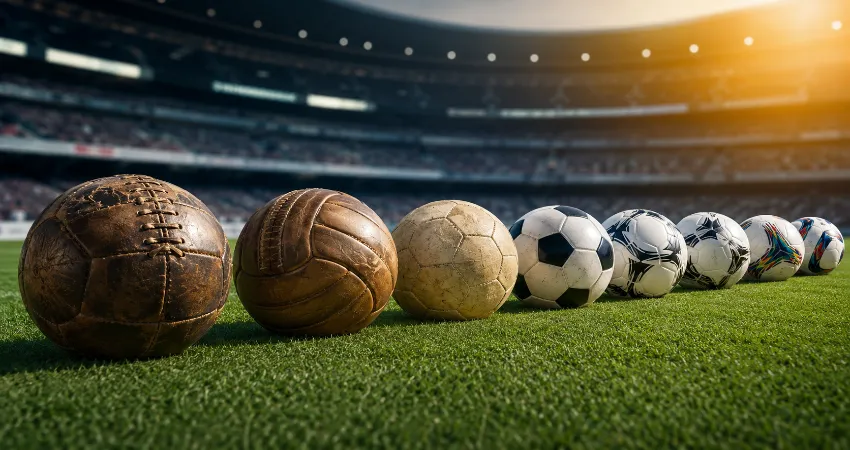
The Evolution of the Football: How Official Match Balls Changed Over the Decades

Football is often called the world’s most popular sport, captivating billions of fans across continents. While players, tactics, and stadiums have evolved dramatically over time, one of the most fascinating aspects of the game is the transformation of the football itself. The official match ball has undergone remarkable changes in design, materials, aerodynamics, and manufacturing techniques, helping shape the way modern football is played today.
From the heavy leather balls used in the early years of organized football to the technologically advanced match balls seen in major international tournaments, each generation of football has reflected the innovations of its era. These developments have not only improved performance but also enhanced player comfort, consistency, and game quality.
Understanding the evolution of official match balls provides valuable insight into how technology and sports engineering have influenced football over the decades. This article explores the journey of footballs from their humble beginnings to the highly sophisticated designs used in modern competitions.
The Early Days of Footballs
In the nineteenth century, footballs were far different from the ones used today. Early balls were typically made from animal bladders covered with leather. The inflated bladder served as the core, while the leather exterior provided shape and durability. These footballs were often irregular in shape and size, making gameplay unpredictable.
Because leather absorbed water easily, matches played in wet conditions resulted in heavier balls. Heading the ball could be uncomfortable and sometimes painful for players. Despite these limitations, leather footballs remained the standard for many decades and played a significant role in the development of the sport.
The Introduction of Standardized Match Balls
As football became more organized, governing bodies recognized the need for standardized equipment. In the late nineteenth and early twentieth centuries, regulations were introduced to define the size, weight, and circumference of match balls.
Manufacturers began producing footballs with greater consistency, helping ensure fairness across competitions. Standardization also allowed players to develop more reliable techniques, as they could expect similar ball behavior regardless of where matches were played.
The Traditional Brown Leather Football Era
For much of the twentieth century, brown leather footballs dominated the sport. These balls featured stitched leather panels and a lace-up opening used to secure the internal bladder. The appearance of these footballs became iconic and remains closely associated with football’s early history.
Although they represented an improvement over earlier designs, traditional leather balls still had significant drawbacks. Water absorption remained a problem, and the laces could create uneven surfaces that affected ball movement. Nonetheless, these footballs were used in countless historic matches and helped establish football’s global popularity.
The Shift to Synthetic Materials
One of the most important milestones in football evolution occurred during the mid-to-late twentieth century with the introduction of synthetic materials. Manufacturers began replacing natural leather with synthetic coatings that resisted water absorption and improved durability.
Synthetic footballs maintained their weight more effectively during wet weather, allowing for more predictable performance. Players benefited from better control, improved passing accuracy, and a more consistent playing experience. This transition marked the beginning of a new era in football technology.
The Rise of the Black-and-White Panel Design
Perhaps no football design is more recognizable than the classic black-and-white ball. Popularized during the 1970 FIFA World Cup, the design featured a pattern of black pentagons and white hexagons arranged in a truncated icosahedron structure.
This pattern became famous because it was highly visible on black-and-white television broadcasts, helping viewers follow the action more easily. Beyond aesthetics, the design also contributed to improved structural consistency and balance, making it one of the most influential football designs in history.
World Cup Match Balls and Technological Innovation
Major international tournaments have often served as testing grounds for football innovation. FIFA World Cup match balls, in particular, have showcased significant technological advancements over the decades.
Manufacturers introduced new panel configurations, advanced synthetic materials, and improved bladder technologies. Each generation aimed to enhance aerodynamics, stability, and player control. Tournament footballs became symbols of innovation and frequently influenced football production worldwide.
The Impact of Aerodynamics on Football Design
Aerodynamics has become a major focus in modern football manufacturing. Engineers study how air flows around the ball to optimize flight characteristics and improve consistency during matches.
Advancements in panel shape, surface texture, and bonding techniques have significantly influenced ball behavior. Modern footballs are designed to travel more accurately through the air while maintaining stability during long passes, crosses, and shots.
These improvements have allowed players to perform more sophisticated techniques and have contributed to the faster pace of modern football.
The Introduction of Thermally Bonded Panels
Traditional footballs relied on stitched panels to maintain their structure. While effective, stitching could create small inconsistencies and allow moisture to enter the ball over time.
The development of thermally bonded panels represented a major breakthrough. Instead of stitching, panels are bonded together using heat and advanced manufacturing processes. This creates a smoother surface, improves water resistance, and enhances shape retention.
Many modern official match balls use thermal bonding technology because it delivers superior consistency and durability under various playing conditions.
Modern Match Balls and Smart Technology
In recent years, football manufacturers have begun incorporating smart technologies into official match balls. Embedded sensors can provide valuable data regarding speed, trajectory, spin, and impact points.
These innovations support modern officiating systems and performance analysis. In elite competitions, connected ball technology helps improve decision-making and enhances the overall accuracy of match management.
Smart football technology demonstrates how digital innovation continues to influence the future of the sport.
How Official Match Balls Influence Playing Style
The characteristics of a football can significantly impact gameplay. Ball weight, surface texture, aerodynamic behavior, and responsiveness all affect how players pass, shoot, dribble, and control possession.
As footballs have become lighter, more consistent, and technologically advanced, players have adapted their techniques accordingly. Modern football often emphasizes quick passing, precise movement, and long-range shooting, all of which benefit from improved ball performance.
The evolution of match balls has therefore played an important role in shaping the tactical and technical development of football itself.
The Future of Football Design
The future of football design is likely to focus on sustainability, data integration, and further aerodynamic refinement. Manufacturers are increasingly exploring environmentally friendly materials while maintaining high performance standards.
Advanced sensor technologies may provide even more detailed data for coaches, players, and officials. Improvements in manufacturing precision could also lead to footballs with unprecedented consistency and reliability.
As technology continues to advance, official match balls will remain an important area of innovation within the football industry.
FAQs About The Evolution of the Football
1. Why were early footballs made from animal bladders?
Animal bladders were widely available and could be inflated to create a ball-like shape. Before modern manufacturing techniques existed, they provided a practical solution for creating footballs. However, they lacked consistency and durability compared to modern materials.
2. What problems did leather footballs have?
Leather footballs absorbed water during wet conditions, becoming heavier and less predictable. They could also be uncomfortable when heading the ball, especially after prolonged exposure to rain.
3. Why is the black-and-white football design so famous?
The black-and-white pattern became popular because it was easier to see on television broadcasts. It also provided a visually distinctive appearance that became closely associated with football around the world.
4. What are synthetic footballs made from?
Modern footballs typically use synthetic materials such as polyurethane and other engineered composites. These materials improve durability, water resistance, and overall performance compared to traditional leather.
5. What is thermal bonding in football manufacturing?
Thermal bonding is a process that uses heat to join football panels instead of stitching them together. This creates a smoother surface, reduces water absorption, and helps maintain a consistent shape.
6. How do modern footballs improve player performance?
Modern footballs provide better balance, predictable flight paths, and enhanced touch. These qualities help players perform accurate passes, powerful shots, and controlled dribbling more effectively.
7. Why do football manufacturers study aerodynamics?
Aerodynamics determines how a football moves through the air. Understanding airflow helps manufacturers design balls that fly more consistently, improving both gameplay and player confidence.
8. Are all official footballs the same size?
Most professional competitions use standardized size and weight regulations. These standards ensure fairness and consistency across different leagues, tournaments, and international matches.
9. What role do sensors play in modern footballs?
Sensors can collect data related to ball movement, speed, and contact points. This information supports officiating systems, performance analysis, and technological advancements in professional football.
10. What might future footballs look like?
Future footballs may incorporate more sustainable materials, advanced sensor systems, and refined aerodynamic designs. These innovations could improve performance while reducing environmental impact.
Conclusion
The evolution of the football reflects the broader progress of technology and sports science over the past century. From heavy leather balls filled with animal bladders to sophisticated thermally bonded designs equipped with smart technology, official match balls have continuously improved in performance, consistency, and durability.
These advancements have not only enhanced the playing experience but have also contributed to the development of modern football itself. As innovation continues, the football will remain at the center of the sport’s ongoing transformation.